Is the CMFAS RES 5 Exam Difficult? (A 2026 Pass Rate Analysis)
Why is the CMFAS RES 5 exam considered one of the hardest financial papers in Singapore? We analyze the 2026 pass rates, the top 3 reasons candidates fail, and how to beat the odds.
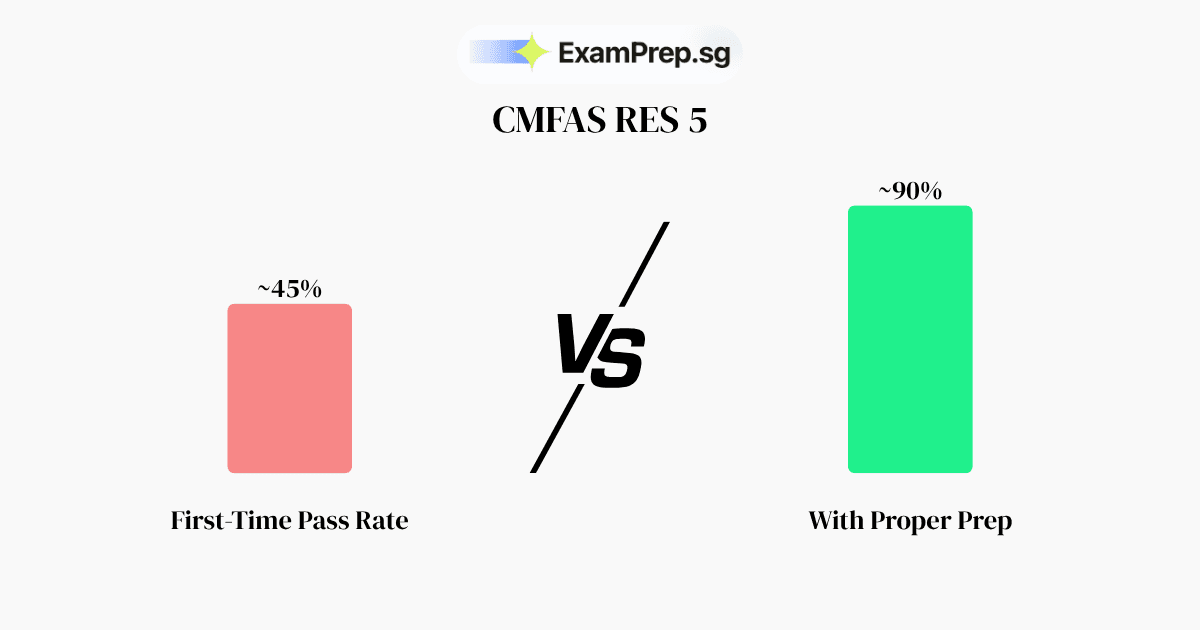
It's the question every new financial adviser asks: "Is the RES 5 exam actually hard, or are people just exaggerating?"
The honest answer? Yes, it is hard.
While official pass rates are not published by SCI, industry feedback suggests the new Two-Part Scoring System has significantly increased the failure rate compared to the old M5 exam. It is widely considered one of the most challenging papers in the entire CMFAS module series, often requiring multiple attempts to clear.
But why is it so difficult? And more importantly, how can you ensure you're one of the few who pass on the first try?
Here is a breakdown of the three hidden traps that make this exam so tough in 2026.
✨ TL;DR: Why RES 5 Is Hard (And How to Win)
- The Volume: The syllabus is massive, covering complex regulations and laws.
- The "Two-Part Trap": You can't just be "good enough." You must pass separate Part I and Part II cut-offs.
- The Phrasing: Questions are "situational," testing application rather than memory.
- The Fix: Use a tool that tracks your split scores and drills your weak chapters.
Reason #1: The "Two-Part" Scoring Trap
Most CMFAS exams (like M9 or M9A) have a single passing score (usually 70%). If you are weak in one chapter, you can make up for it by being strong in another.
RES 5 does not allow this.
As we detailed in our guide to the RES 5 passing score, you must achieve 75% in Part I AND 80% in Part II in the same sitting.
This "double jeopardy" rule is the #1 reason for failure. Candidates often score 90% on the regulations but get a 76% on Ethics (Part II) and fail the entire exam.
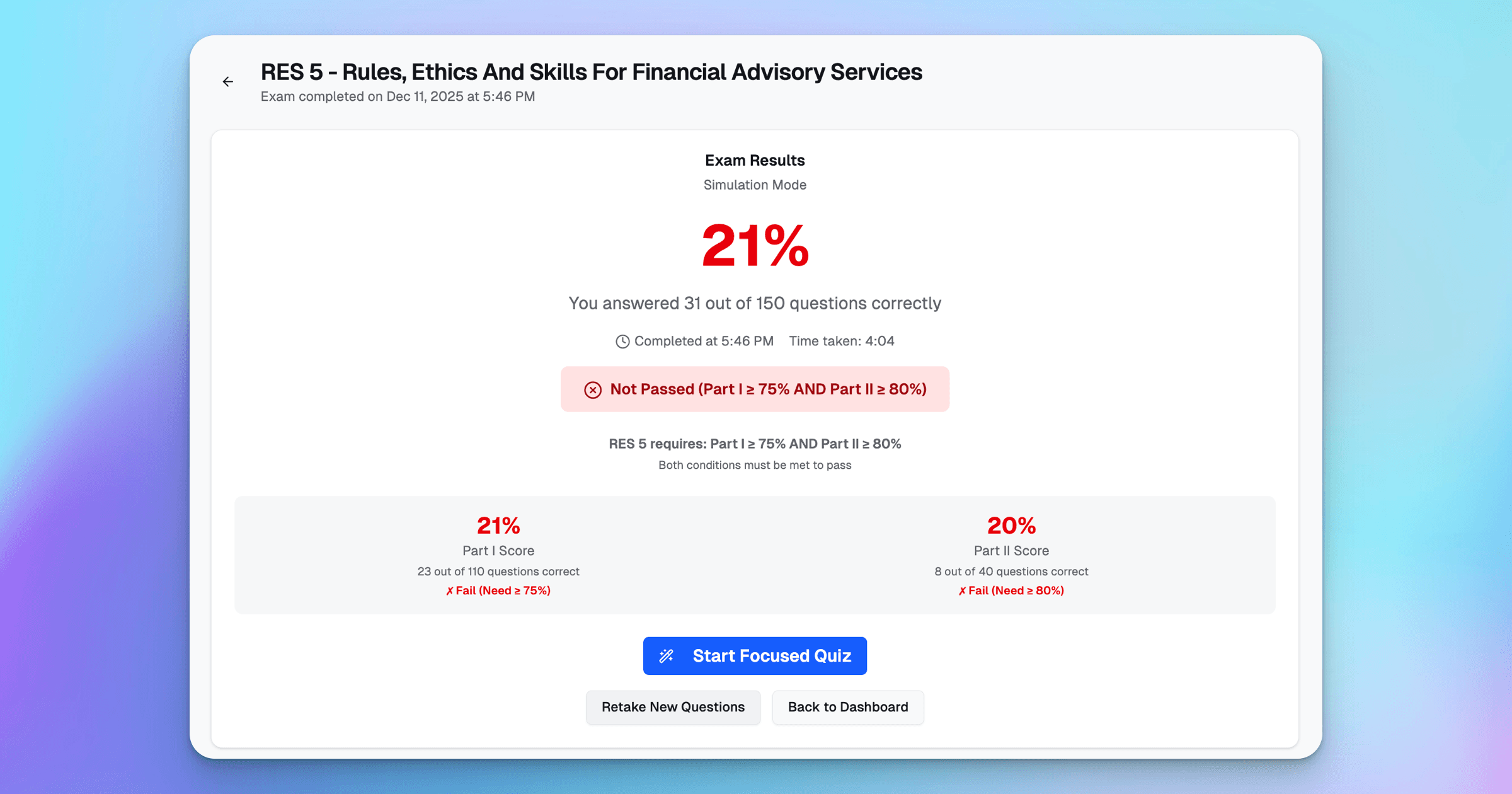
ExamPrep.sg provides separate Part I and Part II scores to help you identify your weaknesses
📊 Do you know your "Split Score"?
Most mock papers from carousell or other platforms only give you a total score (e.g., 80%). That is dangerous. You need to know if you are hitting the 80% Part II Cut-off.
👉 Use ExamPrep.sg RES 5 Exam Simulator (Free Demo)Reason #2: "Situational" Questions vs. "Textbook" Answers
If you are using old study notes or outdated M5 materials, you are preparing for a different exam. Read the latest 2026 RES 5 syllabus changes here to see what's different.
The old exams tested recall (e.g., "What is the penalty for X?"). The 2026 RES 5 exam tests application (e.g., "In this specific client scenario, what is the most ethical course of action?").
These questions are tricky (we broke down 5 real examples of these situational traps here). The English can be complex, and often two answers will look "correct," but only one is the "best" answer according to the MAS Guidelines. Memorizing the textbook won't help you here; you need practice with scenario-based questions.
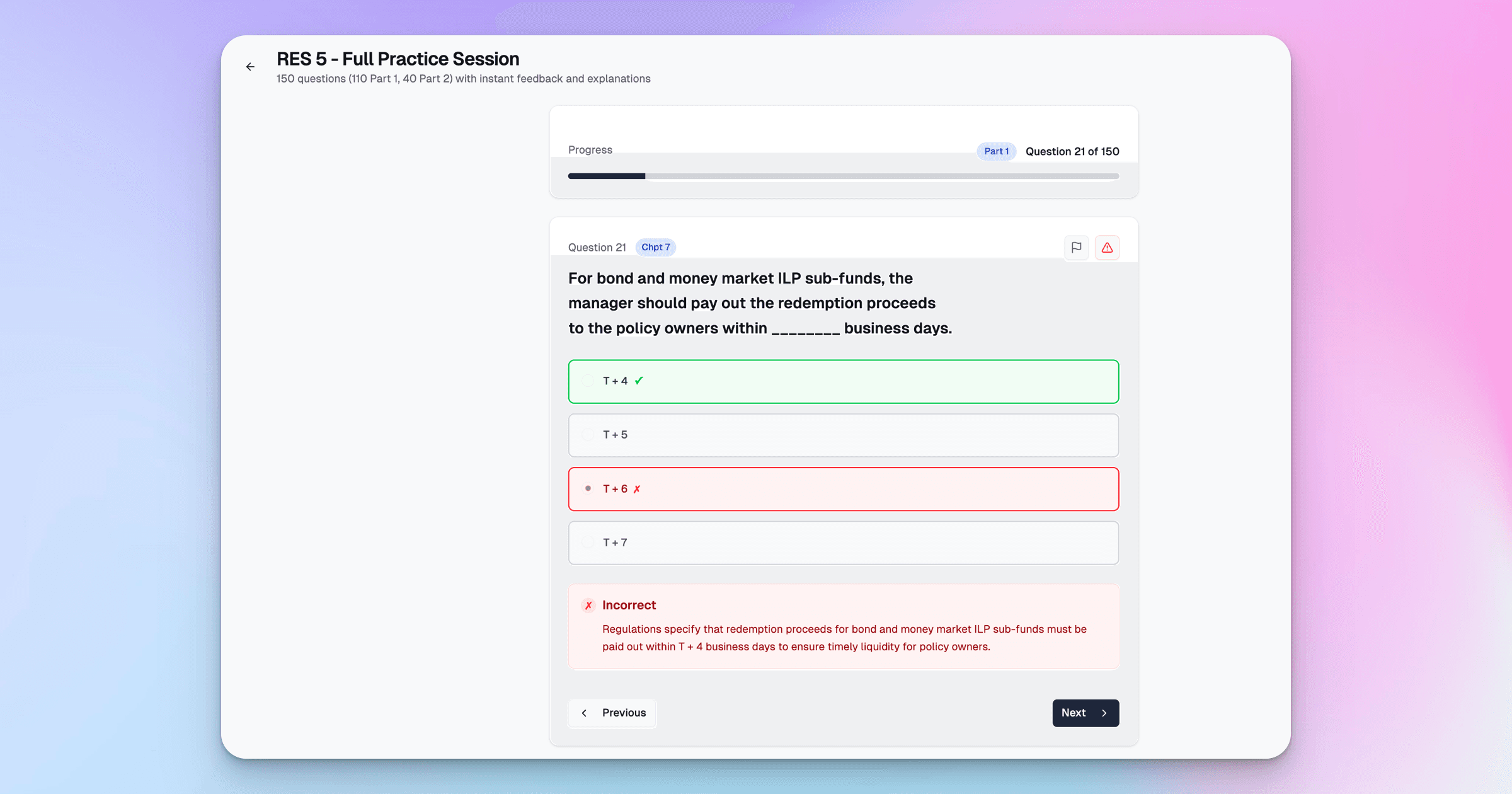
ExamPrep.sg provides instant feedback and explanations to help you understand the concepts better
Reason #3: The Sheer Volume of Content
The RES 5 syllabus is dense. It covers everything from the Financial Advisers Act (FAA) to the Prevention of Money Laundering (AML/CFT) to intricate Advisory Guidelines.
The "spray and pray" method of studying—reading the whole book and hoping for the best—is a recipe for burnout. You cannot master 100% of the syllabus in a few weeks. (See our Mock Exam Comparison Guide for more details).
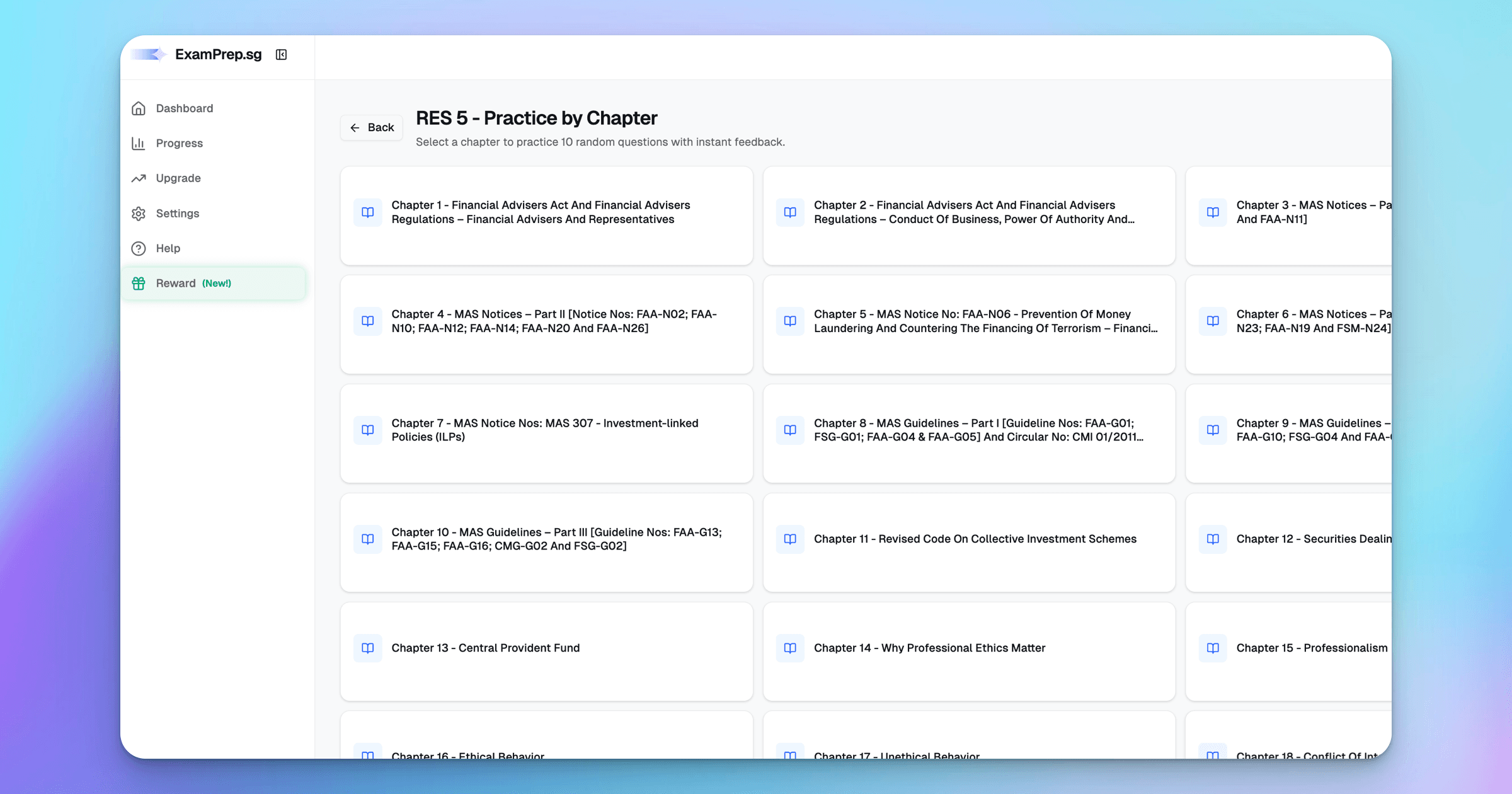
Drill on your weakest chapters by using the "Practice by Chapter" mode
The Strategy: How to Beat the Odds
To pass RES 5, you need to stop studying "hard" and start studying "surgically." You need to identify exactly which of the two parts (and which specific chapters) are dragging your score down.
This is why we built the AI Weakness Engine at ExamPrep.sg.
Instead of guessing, our platform:
- Tracks your Part I and Part II scores separately in real-time.
- Identifies your weak chapters (e.g., "You are failing Chapter 15: Professionalism").
- Builds custom quizzes just for those topics.
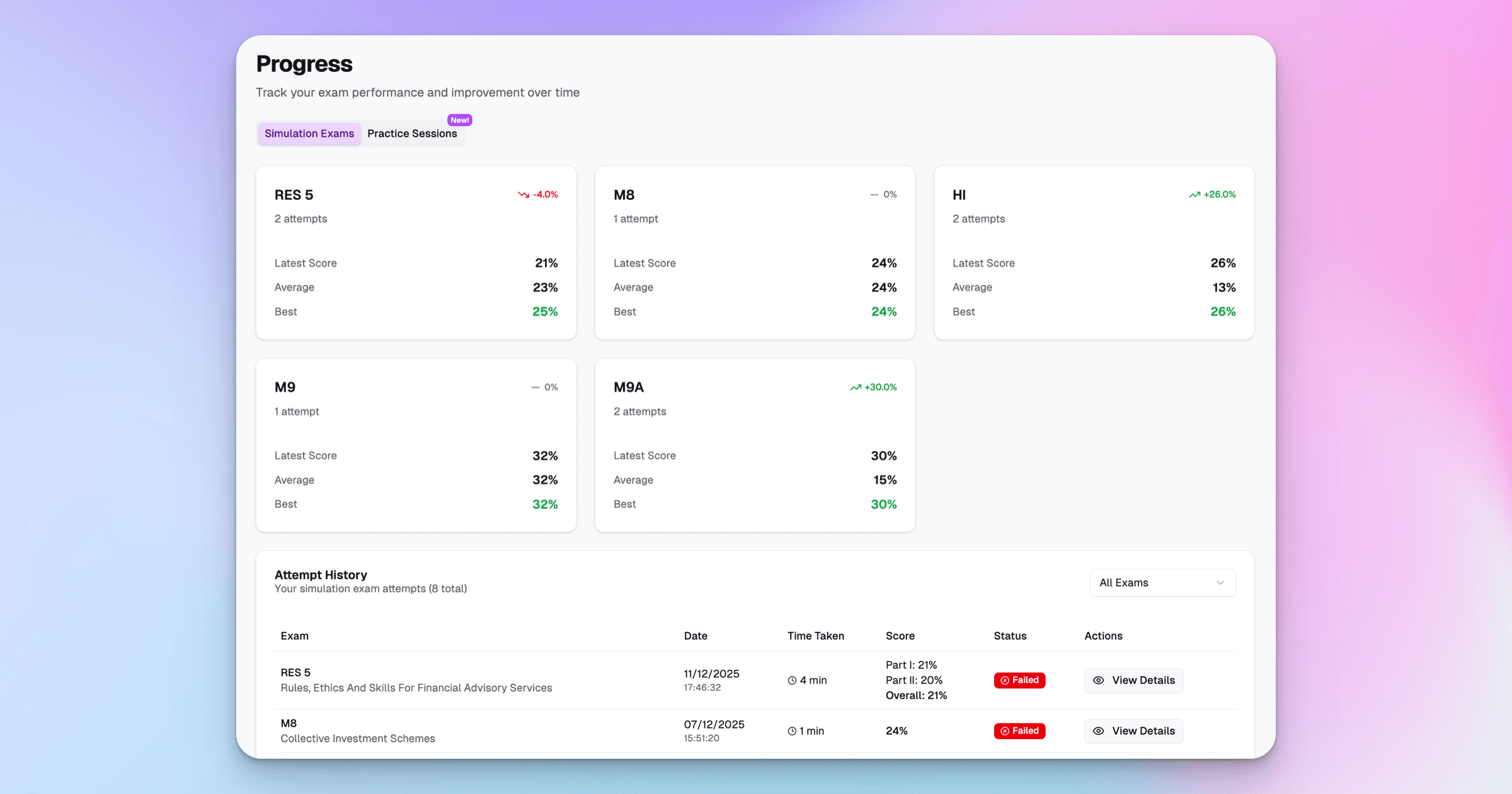
Track your progress and see your improvements over time
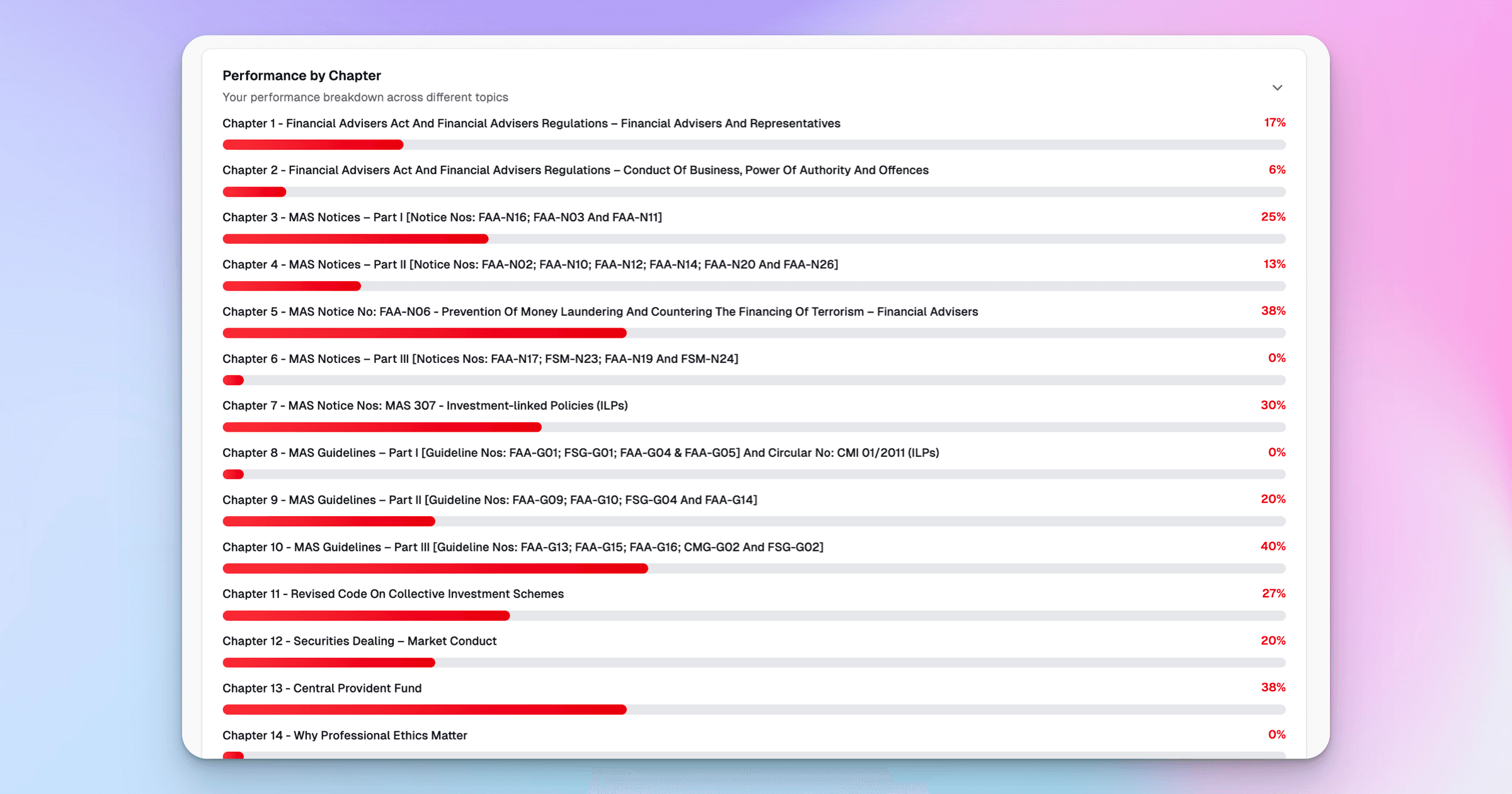
You can also see your performance by chapter to help you focus your study on your weakest chapters
Conclusion: It's Hard, But It's Beatable
Is the RES 5 exam difficult? Yes. Is it impossible? No.
The candidates who pass on the first try aren't smarter; they just have a better strategy. They respect the two-part scoring, they practice situational questions, and they use data to fix their weak spots before exam day.
Once you are ready to commit, secure your exam date immediately to give yourself a firm deadline.
---
Ready to build your winning strategy?
Don't be part of the majority who fail. Read our complete guide to building a data-driven study plan: How to Pass CMFAS RES 5 Exam Singapore: Complete 2026 Study Guide & Strategy.
Frequently Asked Questions About RES 5 Exam

By The ExamPrep.sg Team
Singapore's leading CMFAS and SCI exam preparation platform, helping thousands of candidates pass their financial adviser exams on the first try.
Ready to Put This Strategy Into Action? 💯
Join thousands of successful candidates who have passed their RES 5 exam using our proven study methods.